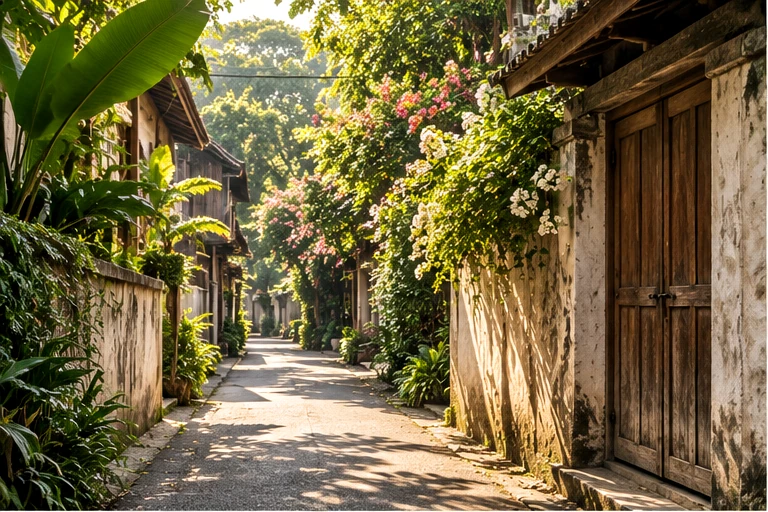
Three neighbourhood names appear frequently in Chiang Mai advice. They aren't three grades of quality. They're different starting points, and none guarantees a good fit at the property level.
Three places to begin.
| Area | Why to explore it | What to check |
|---|---|---|
| Nimman | Cafés, contemporary apartments, a social and remote-work-oriented environment | Traffic, possible aircraft noise, quieter side streets, exact-unit workspace |
| Santitham | Daily neighbourhood routines, local dining options, potential rental-value comparisons | Your walking route, nearby services, unit condition, transport to regular destinations |
| Old City | Cultural surroundings and central walking routes for many activities | Street noise, vehicle access, building age, room layout and availability for monthly terms |
These are broad editorial descriptions based on published guides, not property inspections or verified real-time comparisons. Every address can differ significantly within the same area.
Nimman: lively days.
Nimmanhaemin is often associated with cafés, restaurants and contemporary urban living. If you work from cafés, meet people regularly or want multiple everyday options nearby, it is a reasonable place to start browsing. But proximity and atmosphere should not mask the details of where you actually sleep and work.
Walk the route from a candidate building to the places you will use. Ask whether the room faces a busy road, whether there are nearby late-night venues, and how noise changes by hour. Request internet evidence from that unit. If silence is non-negotiable, a confident neighbourhood recommendation is not enough.
Santitham: everyday rhythms.
Santitham is commonly discussed as a residential alternative for longer stays, with food and services used in everyday life. It can be a useful comparison for someone who wants to avoid making cafés and nightlife the centre of each day. But “more local” should never be treated as a guarantee of calm, savings or convenience.
Test the exact route to groceries, exercise, cafés or coworking spaces you expect to use. If you do not intend to rent a scooter, calculate the time and recurring transport cost for a normal week. A lower quoted rent can still become a worse decision if getting around creates a daily burden.
Old City: streets to explore.
The historic centre is compelling if you want temples, cafés and central streets within a relatively walkable area. For visitors coming for a short holiday, that can be an obvious appeal. For a 60–90-day stay, the building and street still matter: older layouts, limited parking or noise can be decisive for particular travellers.
Inspect the exact access route and the room's ability to support your ordinary routine. If you plan to cook daily, work through the night or store a bike, verify those needs rather than assuming a central location compensates for missing facilities.
Find what fits you.
Give each category a personal importance of 1–5. Compare real addresses—not vague neighbourhood reputations—and record whether the evidence is known, missing or negative.
| What matters | Importance | Evidence to gather |
|---|---|---|
| Sleep and quiet | 1–5 | Room orientation, road exposure, night-time sound |
| Work | 1–5 | Desk, power, real room-level internet test |
| Daily errands | 1–5 | Walking route to groceries, food, laundry |
| Travel | 1–5 | Time and cost to your frequent destinations |
| Total cost | 1–5 | Complete quote, deposits, utilities, cleaning |
| Preferred atmosphere | 1–5 | Visit or credible recent observations at relevant times |
The rule that keeps the comparison honest
An area may score highly for convenience, but a property with a documented, unacceptable noise level is still REJECT. A unit without evidence of essential internet is HOLD. Only after the hard conditions are supported should preferences decide between options.
Spend a day in the area.
- Choose two areas based on what your week should contain.
- Save three exact candidate addresses in each area, with source URLs and dates.
- Compare real walking or transport routes at the times you'll use them.
- Check street sound at day and night; distinguish resident accounts from assumptions.
- Request full accommodation terms and specific unit evidence.
- Choose a preferred candidate and a backup—while allowing HOLD if decisive facts remain missing.
Once you have shortlisted areas, use the monthly accommodation checklist for price, deposit and contract questions. If you are still deciding whether the city fits your dates, read the 30–90-day Chiang Mai overview.
Sources & notes
Prepared November 2026. The character sketches above are broad, published descriptions; property and street conditions need independent, current checks. We do not rank verified listings or claim firsthand inspections.